

 ahsan
ahsan Candlestick Patterns in Trading In the world of trading, numbers and charts tell only part of the story. Behind every price movement lies human emotion—fear, greed, hesitation, and confidence. Candlestick patterns are one of the most powerful tools traders use to read these emotions and anticipate market behavior. Unlike simple line charts, candlesticks provide a visual representation of price action, showing the opening, closing, high, and low prices within a specific time frame.
By studying these patterns, traders gain insights into market psychology, helping them predict potential reversals, trend continuations, and key decision points. Whether you are a beginner or an experienced trader, understanding candlestick patterns is essential for making informed, strategic trading decisions.
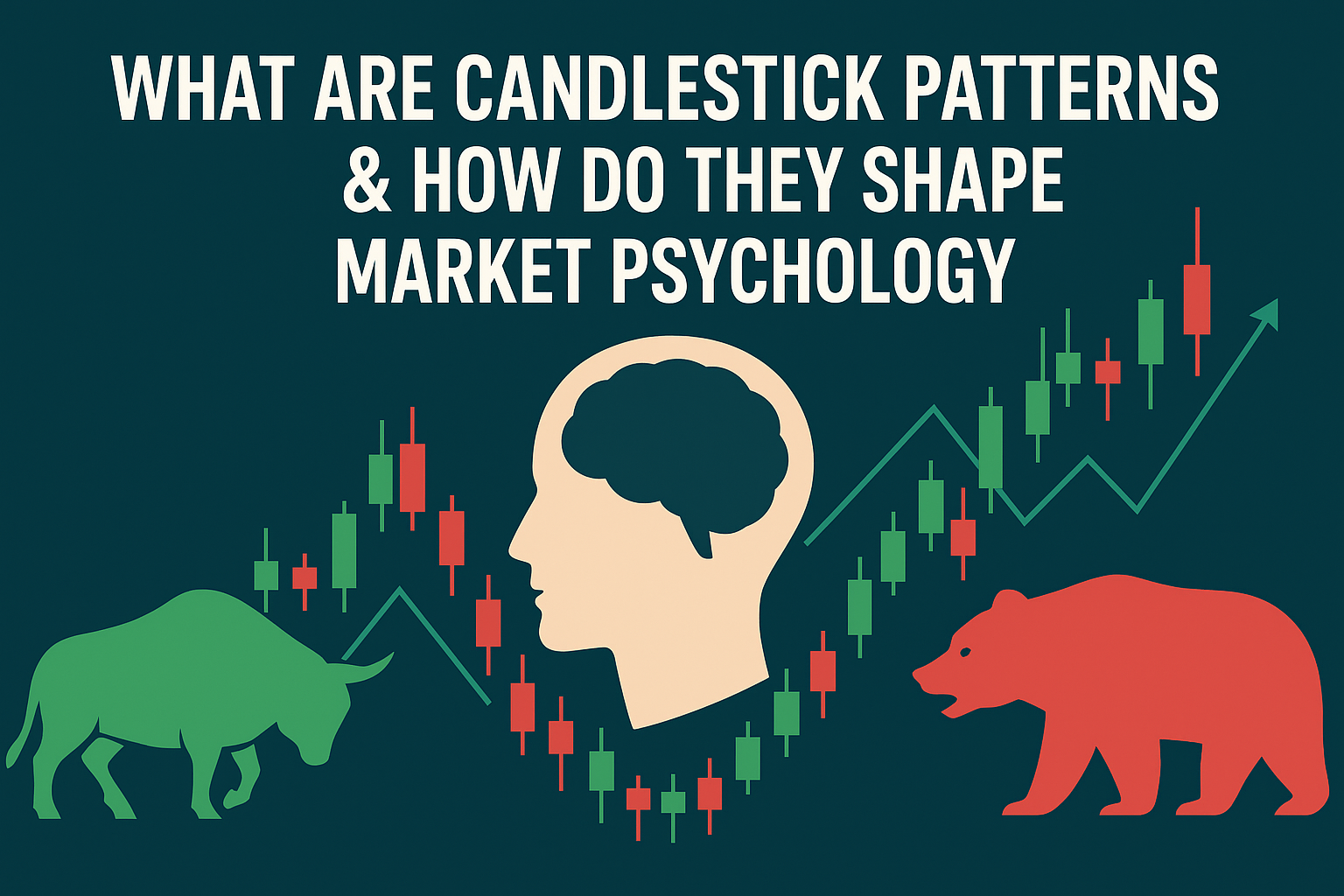
What Are Candlestick Patterns & How Do They Shape Market Psychology
Understanding the market is not just about numbers and charts; it’s about human psychology. Every rise and fall in price tells a story, and one of the most effective ways traders interpret these stories is through candlestick patterns. These patterns are more than just colorful bars on a chart—they are reflections of traders’ emotions, decisions, and reactions to market events.
In this article, we will explore what candlestick patterns are, the key types, and how they shape market psychology to give traders a strategic advantage.
Table of Contents
-
Introduction to Candlestick Patterns
-
History of Candlestick Charts
-
Anatomy of a Candlestick
-
Why Candlestick Patterns Are Important
-
Key Candlestick Patterns and Their Psychology
-
Single Candlestick Patterns
-
Double Candlestick Patterns
-
Triple Candlestick Patterns
-
-
How Candlestick Patterns Reflect Market Sentiment
-
Combining Candlestick Patterns with Other Analysis Tools
-
Common Mistakes Traders Make with Candlestick Patterns
-
FAQs About Candlestick Patterns
-
Conclusion
1. Introduction to Candlestick Patterns
Candlestick patterns are visual representations of price movements in financial markets. Unlike traditional line charts, which only show the closing prices, candlestick charts provide a richer view of open, high, low, and close prices for a given time period.
Each candlestick tells a story about the battle between buyers (bulls) and sellers (bears). By analyzing the patterns formed by one or more candlesticks, traders can anticipate potential market movements.
Candlestick patterns are widely used in stocks, forex, commodities, and cryptocurrency markets because they reveal market psychology in a simple, intuitive way.
2. History of Candlestick Charts
Candlestick charts were first developed in Japan in the 18th century by a rice trader named Munehisa Homma. Homma noticed that rice prices were influenced by the emotions and psychology of traders, not just supply and demand. He used candlestick charts to predict price movements by analyzing patterns formed by daily trading activity.
This technique traveled from Japan to the West in the late 20th century, where it became a fundamental tool for traders worldwide. Today, candlestick patterns are a standard part of technical analysis.
3. Anatomy of a Candlestick
Before understanding patterns, it’s essential to know the anatomy of a single candlestick:
-
Body: The colored part of the candlestick. It represents the range between the opening and closing price.
-
Green/white body: Closing price is higher than opening (bullish)
-
Red/black body: Closing price is lower than opening (bearish)
-
-
Wicks/Shadows: Thin lines extending above and below the body.
-
Upper wick: Shows the highest price reached
-
Lower wick: Shows the lowest price reached
-
-
Open and Close: Prices at which the candlestick period started and ended.
This simple structure provides traders with a visual snapshot of market sentiment.
4. Why Candlestick Patterns Are Important
Candlestick patterns are important because they:
-
Reveal Market Psychology: They show who is in control—buyers or sellers.
-
Help Identify Trends: Patterns can indicate potential trend reversals or continuations.
-
Enhance Decision-Making: Traders use patterns to make entry and exit decisions.
-
Work Across Timeframes: Candlesticks are effective for day trading, swing trading, and long-term investing.
By recognizing these patterns, traders can anticipate market behavior rather than react to it blindly.
5 Key Candlestick Patterns and Their Psychology
Candlestick patterns can be classified into three categories: single, double, and triple candlestick patterns. Each type provides unique insights into market sentiment.
Single Candlestick Patterns
-
Doji
-
Appearance: Small or no body with long wicks
-
Psychology: Indicates indecision; buyers and sellers are balanced
-
Example: Market may reverse after a strong trend
-
-
Hammer
-
Appearance: Small body with a long lower wick
-
Psychology: Buyers are gaining strength after sellers pushed prices down
-
Signal: Potential bullish reversal
-
-
Shooting Star
-
Appearance: Small body with a long upper wick
-
Psychology: Sellers are taking control after buyers pushed prices up
-
Signal: Potential bearish reversal
-
Double Candlestick Patterns
-
Bullish Engulfing
-
Appearance: Small bearish candle followed by a larger bullish candle
-
Psychology: Buyers overpower sellers, signaling a potential uptrend
-
-
Bearish Engulfing
-
Appearance: Small bullish candle followed by a larger bearish candle
-
Psychology: Sellers overpower buyers, signaling a potential downtrend
-
-
Tweezer Tops and Bottoms
-
Appearance: Two candles with matching highs or lows
-
Psychology: Indicates potential reversal; market tested resistance or support
-
Triple Candlestick Patterns
-
Morning Star
-
Appearance: Large bearish candle, small indecision candle, large bullish candle
-
Psychology: Market sentiment is shifting from bearish to bullish
-
Signal: Strong bullish reversal
-
-
Evening Star
-
Appearance: Large bullish candle, small indecision candle, large bearish candle
-
Psychology: Market sentiment is shifting from bullish to bearish
-
Signal: Strong bearish reversal
-
-
Three White Soldiers / Three Black Crows
-
Appearance: Three consecutive bullish or bearish candles
-
Psychology: Confirms strong trend continuation
-
Signal: High-confidence trend movement
-
6. How Candlestick Patterns Reflect Market Sentiment
Every candlestick pattern represents the collective psychology of traders:
-
Fear: Sharp downward wicks or consecutive bearish candles indicate panic selling.
-
Greed: Long bullish candles show buying enthusiasm.
-
Indecision: Doji candles reflect uncertainty; neither buyers nor sellers are in control.
By reading these cues, traders can predict market reactions before they happen, giving them a strategic edge.
7. Combining Candlestick Patterns with Other Analysis Tools
While candlestick patterns are powerful, combining them with other technical tools enhances accuracy:
-
Support and Resistance Levels: Confirm reversal patterns
-
Trend Lines: Validate trend continuation patterns
-
Volume Analysis: Strong volume confirms the reliability of a pattern
-
Moving Averages: Filter false signals
A holistic approach reduces risk and improves the success rate of trades.
8. Common Mistakes Traders Make with Candlestick Patterns
-
Ignoring the Trend: Trading reversal patterns against strong trends can be risky.
-
Overtrading: Not every pattern leads to a profitable trade. Patience is key.
-
Neglecting Confirmation: Wait for additional signals or confirmation before entering trades.
-
Misinterpreting Timeframes: Patterns in very short timeframes may not reflect overall market sentiment.
Avoiding these mistakes increases the effectiveness of candlestick-based strategies.
FAQs
Q1: What are candlestick patterns in trading?
Candlestick patterns are visual representations of price movements within a specific time period. They show the opening, closing, high, and low prices and help traders understand market sentiment and potential price direction.
Q2: Why are candlestick patterns important?
Candlestick patterns reveal the psychology of the market—who is in control, buyers or sellers. They help traders anticipate reversals, trend continuations, and key trading opportunities.
Q3: Can candlestick patterns predict the market accurately?
No pattern is 100% accurate. However, candlestick patterns improve the probability of successful trades when combined with other tools like support and resistance, trend lines, or volume analysis.
Q4: Which are the most reliable candlestick patterns?
Patterns such as Bullish/Bearish Engulfing, Morning Star, Evening Star, and Three White Soldiers / Three Black Crows are considered highly reliable, especially when confirmed with trend or volume analysis.
Q5: Are candlestick patterns useful for beginners?
Yes, they are beginner-friendly because they provide a clear visual snapshot of market behavior. Learning to read candlesticks can help new traders understand market psychology quickly.
Q6: Do candlestick patterns work in all financial markets?
Yes, they work in stocks, forex, commodities, and cryptocurrencies because all markets are driven by human emotions and behavior.
Q7: How should traders use candlestick patterns?
Traders should use candlestick patterns in combination with other technical analysis tools, confirm signals, and always consider the overall market trend to make informed trading decisions.
Conclusion
Candlestick patterns are a window into market psychology. They tell stories of fear, greed, indecision, and control between buyers and sellers. By understanding these patterns, traders can anticipate market movements and make informed decisions rather than acting on guesswork.
While no pattern guarantees success, mastering candlestick analysis provides a significant edge in trading. Combining these patterns with other technical analysis tools ensures better accuracy and helps traders navigate the complex dynamics of the financial markets.
Remember, trading is as much about understanding people as it is about numbers. Candlestick patterns bridge that gap beautifully.
want to read more about trading click here
Big Shoutout to the guys who made this blog happen UDM.